 Rated Excellent on Trustpilot


Edward the Confessor
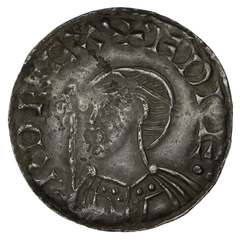
Edward the Confessor was one of the last Anglo-Saxon Kings of England, and ruled from 1042 to 1066. The son of Aethelred the Unready, Edward was canonised a century later by Pope Alexander III; making him Saint Edward the Confessor.
As with many other leaders of this period, coins featuring Edward the Confessor are made of silver, and are almost always of the penny denomination. The Halfpenny wasn't minted until after Edwards reign, and as such Edward the Confessor pennies are occasionally cut in half as a makeshift Halfpenny.
Nearly 1,000 years old, these silver coins are incredible parts of British history, and would make a fine addition to any numismatic coin collection.
Edward the Confessor was born between 1003 and 1005 (the exact year of his birth lost to history), and spent much of his early life in exile. The English monarchy was in a state of turmoil, following attacks by Vikings under Sweyn Forkbeard, and his son Cnut. Following several years of civil war, Cnut eventually became undisputed King of England in 1016, and Edward was forced into exile.
When Cnut's son, King Harthacnut died in 1042, the English nobility supported Edward to retake the throne for the House of Wessex. Edward was crowned King in 1043 at the Cathedral of Winchester.
Although Edward married Edith of Wessex, the two never had children, and opinions vary on whether Edward chose to remain celibate as part of his religious beliefs. Given his fondness for hunting, and a tendency to fits of rage, Edward is considered an unlikely choice for sainthood. Corruption and political appointments were common amongst the Catholic church at this time, and this could explain the decision.
The lack of children resulted in a chaotic succession. He was eventually succeeded by his brother-in-law, Harold Godwinson, who would only rule for a few months before being killed in the infamous Battle of Hastings in 1066. The crown would eventually pass to William the Conqueror.
- Home
-
- CGT-Free Gold Coins
- 0.5g Gold Coin
- 1oz Gold Coins
- 1/2oz Gold Coins
- 1/4oz Gold Coins
- 1/10oz Gold Coins
- 2026 Gold Coins
- 2025 Gold Coins
-
-
- Charles III Gold Sovereign Coins
- Elizabeth II Fifth Head 2016 - 2022
- Elizabeth II Fourth Head 1998 - 2015
- Elizabeth II Decimal Head 1974 - 1984
- Elizabeth II Young Head 1957-1968
- George V 1911 - 1932
- Edward VII Gold Sovereign Coins 1902 - 1910
- Victoria Old Head 1893 - 1901
- Victoria Jubilee Head 1887 - 1893
- Victoria Young Head Sovereign
- Gold Double Sovereign
- Gold Quintuple Sovereign
-
-
Show More Show Less
-
-
- Half Sovereign Elizabeth II Fifth Head 2016 - 2022
- Half Sovereign Elizabeth II Fourth Head 1998 - 2015
- Half Sovereign Elizabeth II Decimal Head 1980 - 1984
- Half Sovereign George V 1911 - 1926
- Half Sovereign Edward VII 1902-1910
- Half Sovereign Victoria Old Head 1893 - 1901
- Half Sovereign Victoria Jubilee Head 1887 - 1893
- Half Sovereign Victoria Young Head Shield Back 1838 - 1887
- Half Sovereign George IV Bare Head 1826 - 1828
- Half Sovereign George III 1817 - 1820
-
Show More Show Less
-
- Gold Quarter Sovereign
- American Gold Buffalo
- Gold Tudor Beasts
- Royal Mint Gold Myths & Legends
- The Lion and The Eagle Gold Coins
- St George and the Dragon Gold Coins
- Royal Arms Gold Coins
- Six Decades of 007 James Bond Gold Coins
- Gold Queen's Beasts
- Royal Mint Gold Lunar
- Best Value Gold Coins 1oz
-
- Andorran Coins
- Australian Gold Coins
- Austrian Gold Coins
- British Gold Coins
- Bahamas Coins
- Bahrain Coins
- Belgian Gold Coins
- Botswanan Gold Coins
- Burundi Coins
-
Show More Show Less
- Canadian Gold Coins
- Chilean Gold Coins
- Costa Rican Coins
- Cuban Gold Coins
- Cyprus Gold Coins
- Danish Gold Coins
- Dutch Gold Coins
- Fiji Coins
- Gambian Coins
- German Gold Coins
- Hong Kong Gold Coins
- Hungarian Gold Coins
- Indian Coins
- Irish Gold Coins
- Isle of Man Gold Coins
- Israeli Gold Coins
- Italian Gold Coins
- Jamaican Gold Coins
- Jordanian Coins
- Latvian Coins
- Lesotho Gold Coins
- Macau Coins
- Malaysia Coins
- Maltese Gold Coins
- Mauritian Coins
- Mexican Gold Coins
- Nepalese Coins
- New Zealand Gold Coins
- Pakistani Coins
- Persian Gold Coins
- Peruvian Gold Coins
- Rwanda Gold Coins
- Sardinia Gold Coins
- Saudi Arabian Coins
- Scottish Gold Coins
- Singapore Gold Coins
- Somalian Gold Coins
- South African Gold Coins
- Spanish Gold Coins
- St Helena Gold Coins
- Sudanese Coins
- Swedish Kronor
- Swiss Gold Coins
- Tanzanian Coins
- Thai Coins
- Tonga Coins
- Tunisian Coins
- Turkish Gold Coins
- United Arab Emirates Gold Coins
- Uruguay Gold Coins
- Venezuelan Coins
- Colombian Gold Coins
- Isle of Man Angel
- Isle of Man Gold Noble
- Isle of Man Sovereign
- Somalian African Wildlife Gold Coins
- South African Big Five Series
- 22k Gold Coins
- 24k Gold Coins
- Perth Mint Gold Wildlife Coins
-
-
- CGT-Free Silver Coins
- 1oz Silver Coins
- 2026 Silver Coins
- 2025 Silver Coins
- Silver Coin Sets
- 2oz Silver Coins
- 5oz Silver Coins
- 10oz Silver Coins
- Silver Canadian Maple
-
Show More Show Less
- Austrian Silver Philharmonic
- Perth Mint Silver Lunar Series
- American Eagle
- The Lion and The Eagle Silver Coins
- Royal Mint Silver Myths & Legends
- St George and the Dragon Silver Coins
- Silver Krugerrand
- Chinese Panda
- Australian Silver Kangaroo
- Australian Koala
- Australian Quokka
- Australian Silver Kookaburra
- Australian Silver Brumby
- Australian Silver Wedge Tailed Eagle
- Australian Wombat
- Australian Silver Swan
- Australian Emu
- Silver Armenian Noah's Ark
- Silver Trees of Life Rounds
- Silver Tudor Beasts
- Silver Royal Arms
- Six Decades of 007 James Bond Silver Coins
- Egyptian Relic Series
- Star Wars Silver Coins
- Silver Queen's Beasts
- Marvel Series Superhero Coins
- DC Comics Series Superhero Coins
- Isle of Man Silver Angel
- Rwanda African Ounce
- Czech Lion Silver Coins
- Somalian African Wildlife Silver Coins
- Slovakian Eagle Silver Coins
- Australian Mint Silver Coins
- Isle of Man Silver Noble
- Komodo Dragon
- Mexican Libertad
- Dragon Rectangle Coin
- 1 Kilo Silver Coins
- Pre-Owned Silver Coins
- Pre 1947 British Silver Coins (.500)
- Sterling Silver Coins (.925)
- Silver Proof Coins & Sets
-
-
-
- King Charles III Proof Coronation Coins
- King Charles III 75th Birthday Proof Coins
- Queen Elizabeth II Memorial Proof Coins
- Royal Mint Annual Commemorative Sets
- Royal Mint Lunar Proof Coins
- Music Legends Proof Coins
- Winnie the Pooh and Friends Proof Coins
- Royal Mint Harry Potter Proof Coins
- Royal Mint Star Wars Proof Coins
- The Snowman Proof Coins
- Krugerrand Proof Coins
-
- Platinum Proof Coins and Sets
- Royal Mint 1/4oz Proof Coins
- Royal Mint 1oz Gold Proof Coins
- Proof £2 coins
- Proof £5 coins
-
Show More Show Less
-
-
- Charles I Coins
- Charles II Coins
- Edward I Coins
- Edward II Coins
- Edward III Coins
- Edward IV Coins
- Edward the Confessor
- Edward VI Coins
- Edward VII Coins
- Elizabeth I Coins
-
Show More Show Less
- Elizabeth II Coins
- Ethelred the Unready
- George I Coins
- George II Coins
- George III Coins
- George IV Coins
- George V Coins
- George VI Coins
- Harthacnut Coins
- Henry II Coins
- Henry III Coins
- Henry IV Coins
- Henry V Coins
- Henry VI Coins
- Henry VII Coins
- Henry VIII Coins
- James I Coins
- James II Coins
- King Cnut Coins
- King John Coins
- Oliver Cromwell Coins
- Philip and Mary Coins
- Queen Anne Coins
- Queen Victoria Coins
- Richard I Coins
- Richard II Coins
- William and Mary Coins
- William III Coins
- William IV Coins
- William the Conqueror
- Graded Coins
-
-
- Request an Information Pack
- Sign up to our Newsletter